
Summer Fire Protection Preparation
Summer can bring a new set of risks for commercial and multifamily properties. Higher temperatures, seasonal equipment use, and changing occupancy patterns can all affect fire and life safety. For property owners and managers, this is a great time to make sure your systems are in working order and that common hazards have not been overlooked.
Seasonal readiness is not just about appearance or convenience. It is about making sure fire protection systems remain accessible, operational, and ready when they are needed.
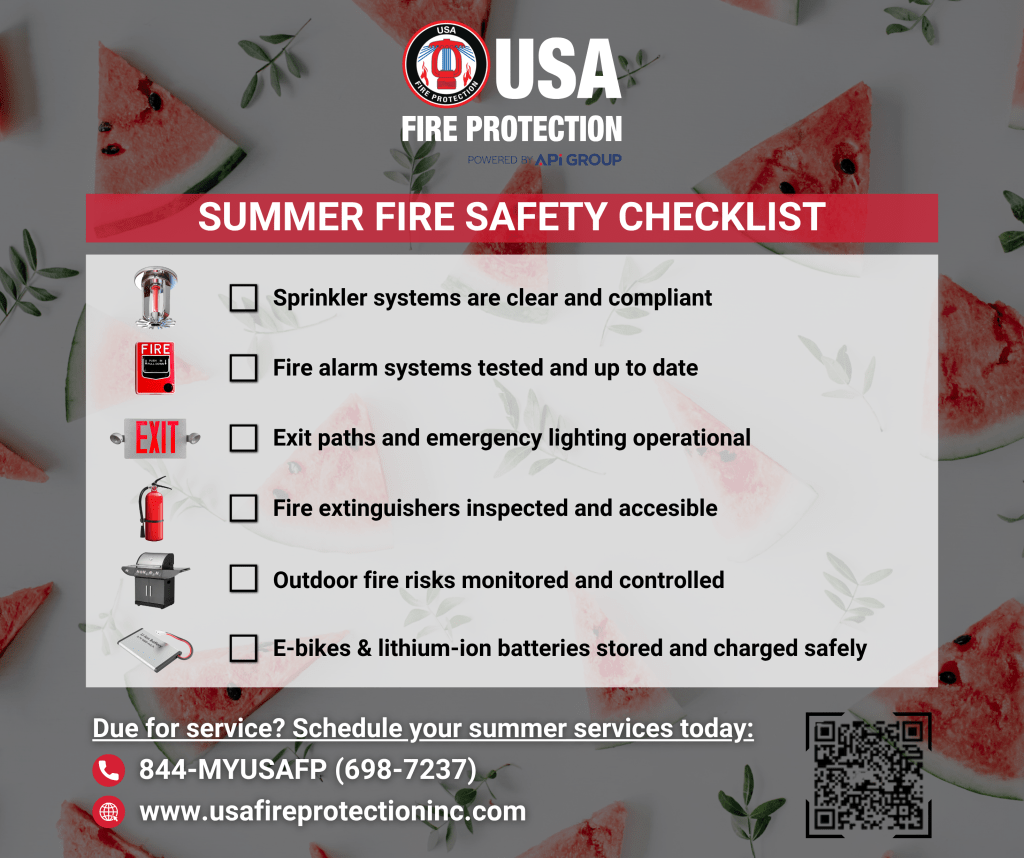
Use this quick checklist as a starting point for your property’s summer fire protection preparation:
Fire and Life Safety Items to Check First
Start with the basics. Fire sprinkler and fire alarm systems should be inspected, tested, and maintained on schedule. A seasonal review is also a good time to confirm systems remain accessible, records are up to date, and any unresolved deficiencies have not been overlooked. It is also important to check that sprinkler heads have not obstructed, painted, or damaged since your last inspection.
Exit paths should always remain clear so occupants can evacuate safely during an emergency. Exit signs and emergency lighting should also be regularly inspected and tested in accordance with applicable code requirements.
Don’t Overlook Outdoor and Seasonal Hazards
Summer also brings additional fire risks. Outdoor cooking equipment, smoking materials, and combustible debris around buildings can all be significant fire hazards if not managed properly.
NFPA research shows that summer months are the peak time for fires involving gas and charcoal grills. They are responsible for thousands of fires each year, including structure fires that often begin on balconies or patios. For multifamily and mixed‑use properties, it is important to monitor outdoor cooking areas and keep grills and other heat sources away from combustible materials. Make sure there are enough appropriate fire extinguishers nearby, and that they are serviced each year.
Warmer weather means that e-bikes will be out more often as well. E-bikes and e-scooters are becoming increasingly common in multifamily properties, and so are the fires they can cause. The batteries that power e-bikes and e-scooters have been known to catch fire. Testing by the Fire Safety Research Institute has shown that following ignition of a lithium-ion battery fire, the time to flashover can be less than one minute. For property managers, it is important to have clear policies around where these devices are stored and charged. Hallways, stairwells, and exit paths should never be used as storage areas for e-bikes or e-scooters, and residents should be encouraged to use only manufacturer-approved chargers and UL-certified devices. You can check out our blog post on Lithium-Ion batteries HERE, or head to NFPA for more information specifically on e-bikes.
Time to Call USAFP
A seasonal walkthrough is a great place to start, but it can’t replace the inspections, testing, and maintenance of your systems that are required by applicable codes. If your property is due for service or you are unsure where to begin, the experts at USAFP can support your compliance needs.
A little attention now can help prevent larger problems later. Let’s keep your property safe throughout the summer months.